
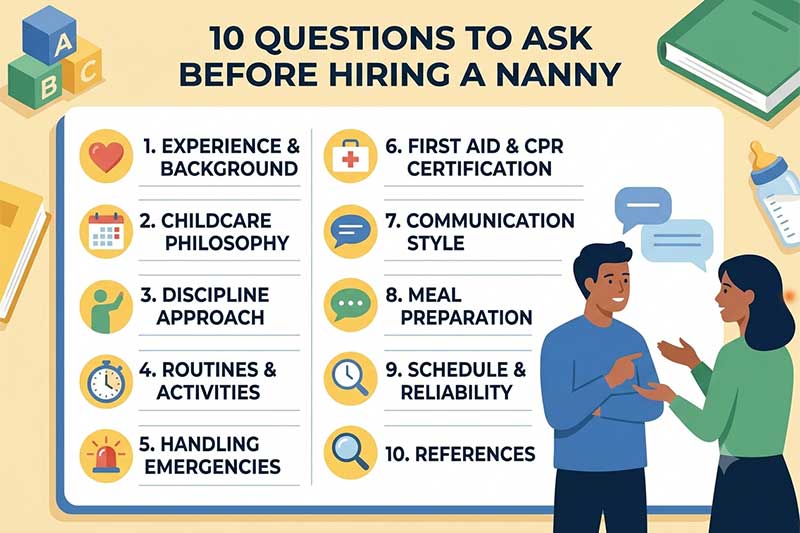
Hiring a nanny is one of the most important decisions a family can make. Before bringing someone into your home, ask about their experience, qualifications, childcare philosophy, availability, and legal work status. The right questions uncover dealbreakers early—and help you find a caregiver who genuinely fits your family’s needs.
Choosing a nanny is nothing like hiring for a typical job. The person you select will spend hours alone with your children, shape their daily routines, and become a fixture in your home life. Get it right, and you gain a trusted partner in your family. Get it wrong, and the consequences can be costly—emotionally and financially.
Yet many parents walk into nanny interviews underprepared, relying on gut feel alone. A warm personality matters, but it’s not enough. The right interview questions reveal a candidate’s work ethic, reliability, values, and whether they have the practical skills your family actually needs.
This guide covers the 10 most important questions to ask before hiring a nanny—plus what to listen for in each answer. Use them to take the guesswork out of one of the most consequential hires you’ll ever make.
Why Asking the Right Questions Before Hiring a Nanny Matters
Most parents focus on résumés and references, but interviews are where the real insights happen. A well-structured conversation helps you evaluate things no document can show: how a candidate responds under pressure, how they talk about children, and whether their values align with yours.
According to the International Nanny Association, families who conduct thorough interviews—covering experience, expectations, and emergency protocols—report significantly higher satisfaction with their hires. Rushed decisions, on the other hand, often lead to early turnover, disrupted routines, and stressed children.
The stakes are high. These 10 questions will help you hire with confidence.
What Experience and Qualifications Should a Nanny Have?
1. What is your childcare experience, and what age groups have you worked with?
Start here. Experience with infants is fundamentally different from experience with toddlers or school-age children. A nanny who thrives with older kids may struggle with the demands of a newborn—and vice versa.
Ask for specifics: How many families have they worked for? How long did each placement last? What were their primary responsibilities? Short tenures at multiple families can be a yellow flag, though it’s worth exploring the reasons. Long-term placements usually indicate reliability and the ability to build lasting relationships.
What to listen for: Concrete examples, not vague generalities. A strong candidate will describe real situations—how they handled a toddler’s tantrum, supported a child’s first day of school, or adapted when a family’s schedule changed.
2. Do you hold any formal childcare certifications or first aid training?
Certifications aren’t everything, but they matter. CPR and first aid training are non-negotiable for most families—and for good reason. Accidents happen, and a nanny who knows how to respond in an emergency can make a critical difference.
Beyond first aid, look for credentials like a Child Development Associate (CDA) designation, early childhood education coursework, or specialized training in areas like special needs support or newborn care. These signal a candidate who takes professional development seriously.
What to listen for: Current, up-to-date certifications. Ask when they last renewed their CPR training. Outdated credentials are better than none—but a proactive nanny will keep theirs current.
How Does a Nanny Approach Child Development and Daily Care?
3. What is your childcare philosophy, and how does it align with our parenting approach?
This is one of the most revealing questions you can ask. A nanny’s childcare philosophy covers everything from discipline and screen time to how they handle big emotions and encourage independence.
A candidate who defaults to authoritarian methods when you prefer gentle parenting will create friction—for you, and for your child. The goal isn’t to find someone who mirrors you exactly, but to find someone who respects your approach and can work within it.
What to listen for: Self-awareness and flexibility. The best nannies can articulate their own values while demonstrating genuine openness to the family’s preferences. To learn more about what defines a great caregiver, read 2 Important Characteristics of a Great Nanny.
4. How do you typically structure a child's day?
Routine matters enormously for children’s development. Ask candidates to walk you through a typical day with a child the same age as yours. Do they incorporate outdoor time, creative play, and learning activities? Or does the day lack structure?
A thoughtful answer shows that the candidate understands child development and doesn’t just default to screens as a babysitting tool.
What to listen for: Age-appropriate activities, a balance between structured and free play, and an understanding of nap schedules or homework routines for older children.
5. How do you handle challenging behaviors, like tantrums or refusal to follow instructions?
Discipline is where philosophies get tested. Ask for a specific example—a time when a child in their care was difficult, and how they responded. Follow up: Did they escalate or de-escalate? Did they involve the parents, or handle it independently?
What to listen for: Calm, consistent, age-appropriate responses. Red flags include any mention of punitive approaches that don’t align with your values, or candidates who struggle to recall a specific example.
What Are the Practical and Logistical Considerations?
6. What are your availability and scheduling expectations?
Mismatched schedules are one of the most common reasons nanny placements fall apart. Be explicit about your needs: start and end times, flexibility for overtime, travel requirements, and any recurring schedule changes.
Ask whether they have secondary commitments—such as another job, school, or family obligations—that could affect their availability. Clarity here protects both parties.
What to listen for: Honesty about limitations. A candidate who agrees to everything without hesitation may be telling you what you want to hear rather than what’s true.
7. Are you legally authorized to work in the United States?
This is not optional. Hiring a nanny who is not legally authorized to work in the U.S. creates significant legal and financial liability for the family. The IRS requires families who pay a household employee more than $2,700 (as of 2024) in a calendar year to handle payroll taxes—a responsibility commonly called the “nanny tax.”
Understanding your legal obligations before hiring is essential. For a detailed overview of what employers need to know, read The Legal Side of Hiring Domestic & Family Office Staff.
What to listen for: Straightforward confirmation and willingness to complete standard employment paperwork, including an I-9 form.
What Does the Candidate Expect From the Role?
8. What additional duties are you comfortable taking on beyond direct childcare?
Many families need a nanny who also manages light housekeeping, meal prep, school pickups, or errand running. These are reasonable expectations—but only if they’re communicated clearly from the start.
A nanny-housekeeper hybrid role carries different expectations than a purely child-focused position. Be transparent about what the role actually involves, and ask candidates directly which additional responsibilities they’re comfortable with. For more on how this role is defined, see What Is the Role of a Nanny Housekeeper?
What to listen for: Reasonable boundaries paired with flexibility. A candidate who won’t consider any household duties and one who agrees to everything without clarification are both worth examining more closely.
9. What are your salary expectations and non-negotiables?
Compensation conversations are often awkward, but skipping them leads to costly misunderstandings. Ask directly about salary expectations, and make clear what your budget allows. Discuss paid time off, holiday pay, sick days, and whether you’ll provide benefits like health insurance contributions.
According to Care.com’s 2024 Cost of Care survey, the national average hourly rate for a nanny in the United States is approximately $21 per hour, though this varies significantly by location, experience, and responsibilities.
What to listen for: Expectations that align with your budget and the role’s demands. Candidates who refuse to discuss compensation at all—or who give wildly inconsistent answers—may create challenges later.
How Does the Candidate Handle Safety and Emergencies?
10. How would you handle a medical emergency or an unexpected situation involving our child?
A calm, capable response to this question tells you a great deal. Every nanny should have a clear protocol: know where emergency contacts are stored, have a plan for calling 911, and understand when to act versus when to wait for parental guidance.
Ask whether they’ve ever faced a real emergency in a previous role. If they have, ask how they handled it and what they would do differently. Experience with a genuine high-stakes moment is far more instructive than a rehearsed answer.
What to listen for: Composure, clarity, and a protocol that prioritizes the child’s safety above all else.
How to Make the Final Decision When Hiring a Nanny
After interviews, narrow your shortlist and conduct thorough background checks. Verify references personally—speak with previous employers rather than relying on written letters. Ask former families specific questions: Was the nanny punctual? How did the children respond to them? Would they hire them again?
A trial period of one to two weeks is a smart investment. It lets you observe the candidate in action and gives the nanny time to acclimate to your household before committing to a long-term contract.
Finally, consider working with a specialist domestic staffing agency. Colonial Agency has been placing trusted nannies and household staff with families nationwide since 1963. With decades of experience in domestic employment, Colonial Agency pre-screens candidates, verifies credentials, and matches families with caregivers who meet their specific needs—removing much of the risk from the hiring process.
Frequently Asked Questions
What background checks should I run before hiring a nanny?
At minimum, run a criminal background check, verify Social Security information, and check driving records if the nanny will transport your children. Many families also conduct reference checks and social media reviews.
How many interviews should I conduct before hiring a nanny?
Most families conduct two to three rounds—an initial phone screening, an in-person interview, and a paid trial session. For full-time roles, a trial day is strongly recommended before extending an offer.
What's the difference between a nanny and a babysitter?
A nanny is a professional caregiver hired on a regular, ongoing basis—often full-time—to provide structured childcare. A babysitter typically provides occasional, short-term care. Nannies are subject to payroll tax obligations that do not apply to casual babysitters.
Should I use a nanny agency or hire independently?
Working with a reputable domestic staffing agency reduces risk significantly. Agencies pre-screen candidates, conduct background checks, and verify credentials before presenting candidates to families. Independent hiring places the full burden of vetting on the family.
What happens if the nanny doesn't work out?
Address concerns early with a direct conversation. If the situation doesn’t improve, document issues clearly and review the terms of your employment agreement. Most domestic staffing agencies offer placement guarantees—meaning they will help you find a replacement at no additional cost within a defined period.