
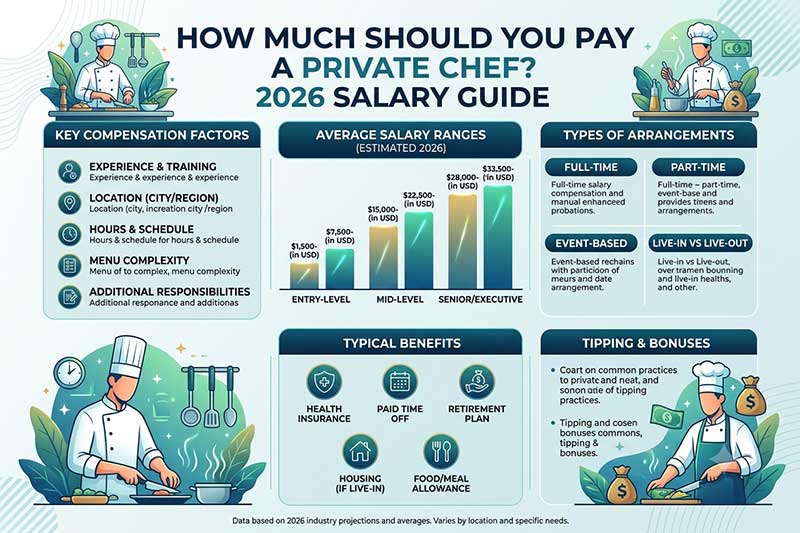
Quick answer: Private chef salaries in the U.S. range from $60,000 to over $200,000 per year in 2026, depending on experience, location, cuisine specialization, and household size. Part-time or per-event private chefs typically charge $45–$150 per hour. Most full-time private chefs working for high-net-worth families earn between $80,000 and $130,000 annually.
Hiring a private chef is one of the most personal—and consequential—staffing decisions a household can make. Get it right, and every meal becomes an experience. Get it wrong, and you’re managing complaints from both the chef and your dinner guests.
But before you can find the right person, you need to know what you’re walking into financially. Private chef salaries vary widely, and many employers are surprised to discover just how broad that range actually is. A recently trained chef cooking weeknight dinners for a family of four commands a very different rate than a Michelin-trained culinary professional managing multiple residences, dietary protocols, and a full kitchen staff.
This guide breaks down exactly what private chefs earn in 2026—by experience level, location, employment type, and specialty—so you can set a realistic budget and make a competitive offer from the start.
What Factors Determine a Private Chef's Salary?
Private chef compensation doesn’t follow a single formula. Several variables interact to push salaries up or down, and understanding each one helps you figure out where your needs fall on the spectrum.
Experience and culinary credentials
A chef with a culinary school degree and five years of restaurant experience will cost more than someone who learned on the job. A chef who trained under a Michelin-starred kitchen, holds certifications in nutrition or pastry, or has worked for high-profile households will command a premium—often 30–50% more than a generalist with similar years of experience.
Location
Geography plays a significant role. Private chefs working in high-cost cities like New York, Los Angeles, San Francisco, and Miami consistently earn more than those in smaller markets. Chefs based in the Hamptons or Aspen—where employers often maintain seasonal residences—may also negotiate higher seasonal rates to reflect the compressed timeline and intensive workload.
Full-time vs. part-time vs. per-event
Employment structure is one of the biggest drivers of salary. A full-time, live-in private chef working five or six days a week is a completely different arrangement—and expense—compared to a chef hired for three dinner parties a month. Make sure you’re comparing apples to apples when reviewing salary data.
Household complexity
Cooking for a single person on a plant-based diet is not the same as managing meals for a family of eight with allergies, entertaining schedules, and rotating houseguests. The more complex the household’s culinary needs, the higher the justified rate.
Live-in vs. live-out
Live-in private chefs often accept slightly lower cash salaries in exchange for accommodation and living benefits. Live-out chefs, who commute to the property, typically expect higher gross compensation to offset their personal housing costs.
What Is the Average Private Chef Salary in 2026?
Here’s a breakdown of typical private chef compensation across different employment types and experience levels in 2026.
Full-time private chef salaries
| Experience Level | Annual Salary Range |
|---|---|
| Entry-level (0–3 years) | $55,000 – $75,000 |
| Mid-level (4–8 years) | $80,000 – $120,000 |
| Senior/highly specialized | $130,000 – $200,000+ |
The median full-time private chef salary in the U.S. sits at approximately $85,000–$95,000 per year for a qualified, experienced professional working in a single-family household. Elite chefs with prestigious backgrounds, multilingual menus, or experience managing kitchen teams at multiple residences regularly exceed $150,000.
Part-time and hourly private chef rates
Part-time private chefs typically charge between $45 and $150 per hour, depending on their skill level and location. A chef preparing three weekly dinners might charge a flat monthly retainer ranging from $2,500 to $6,000, inclusive of grocery shopping and meal planning.
Per-event and private dining rates
For one-off dinner parties or special occasions, private chefs generally charge $100–$250 per person for a multi-course meal, plus the cost of ingredients. Some high-end chefs charge a flat event rate starting at $1,500–$3,000 regardless of guest count.
How Do Private Chef Salaries Compare by U.S. Region?
Location shapes compensation more than most employers expect. Here’s a general snapshot of how salaries vary across key U.S. markets:
- New York City and Tri-State Area: $90,000–$180,000+ for full-time positions. NYC’s high cost of living and concentration of ultra-high-net-worth households pushes rates significantly above the national average.
- Los Angeles and Southern California: $80,000–$160,000. Demand is particularly strong in Beverly Hills, Bel Air, and Malibu.
- South Florida (Miami, Palm Beach): $75,000–$140,000, with seasonal premiums during winter months when estates are most active.
- Chicago and the Midwest: $65,000–$110,000 for comparable experience levels, reflecting lower regional cost of living.
- Texas (Dallas, Houston, Austin): $65,000–$120,000, a market that’s grown steadily as high-net-worth populations have expanded in these cities.
- Rocky Mountain and ski resort markets: Seasonal rates can spike considerably, with some chefs earning $8,000–$15,000 per month during peak season in Aspen or Park City.
What Benefits and Perks Are Typically Included?
Cash salary is only part of the picture. Private chef compensation packages for full-time roles often include additional benefits, particularly in high-net-worth households. Common inclusions are:
- Health insurance: Many employers cover full premiums for the chef and sometimes their dependents.
- Paid time off: Two to four weeks of paid vacation is standard for full-time roles.
- Travel stipends or per diem: Chefs who travel with the family—between residences or on private jets—typically receive a daily allowance on top of their base salary.
- Housing: Live-in arrangements often include a private suite or separate apartment on the property.
- Continuing education allowances: Some employers fund culinary courses or certifications as part of retention strategies.
- Vehicle use: Chefs who handle grocery sourcing may be provided with a vehicle or mileage reimbursement.
These non-cash benefits can add $15,000–$30,000 in annual value to a compensation package—worth factoring into your total budget.
What Does a Private Chef Actually Do? Understanding the Scope of the Role
Salary expectations are directly tied to the scope of work, so it’s worth clarifying what you’re actually hiring for. A private chef’s responsibilities typically include:
- Daily meal planning and preparation for household members
- Sourcing and procuring ingredients, often from specialty grocers or farmers’ markets
- Accommodating dietary restrictions, preferences, and medical nutritional requirements
- Managing kitchen inventory, equipment, and cleanliness
- Coordinating with household staff on meal timing and service
- Planning and executing menus for private events and entertaining
Some households also expect their private chef to manage kitchen budgets, hire and supervise kitchen assistants, or develop recipe books for the family’s archive. The broader the scope, the stronger the salary justification.
For households running complex operations with multiple staff members, it helps to understand how a private chef fits within the broader household team. Colonial Agency’s guide on how to build a harmonious household team offers a useful perspective on structuring staff roles and responsibilities effectively.
Should You Hire a Private Chef Through an Agency or Independently?
Both approaches have merit, but they serve different needs.
Hiring independently gives you full control over the recruitment process. You can search culinary networks, post on specialized job boards, and conduct your own interviews. The tradeoff is time—and risk. Verifying credentials, checking references, and navigating employment contracts takes expertise that most households don’t have in-house.
Working with a domestic staffing agency like Colonial Agency removes much of that burden. Colonial Agency, which has been placing domestic professionals since 1963, pre-screens candidates for experience, professionalism, and household fit before they’re ever presented to a client. For estates, family offices, and high-net-worth households seeking a reliable, long-term hire, this level of vetting is difficult to replicate independently.
There are also legal considerations. Employment agreements, tax withholding, and worker protections for household employees involve specific regulations that differ from standard commercial employment. Colonial Agency’s article on the legal side of hiring domestic and family office staff covers these compliance points in detail—a valuable read before you make any offer.
Agency fees typically range from 15–25% of the candidate’s first-year salary, which is a worthwhile investment when a poor hire in a sensitive household role can cost significantly more to resolve.
How to Write a Competitive Private Chef Job Offer
Once you’ve settled on a salary range, structuring the offer correctly increases your chances of securing the right candidate.
Be specific about scope. Candidates want to know exactly how many people they’ll cook for, how many days per week, and what events they’ll be expected to manage. Vague job descriptions attract mismatched applicants.
Benchmark against the market. A below-market offer—even for a desirable household—will lose strong candidates to competitors. Use the salary ranges in this guide to position your offer competitively.
Lead with the full package. If you’re offering housing, travel, or benefits, include these in the initial offer. Candidates evaluate total compensation, not base salary alone.
Clarify the trial process. Many private chef placements begin with a paid trial period of one to four weeks. Being upfront about this expectation sets the right tone from the start.
For additional guidance on structuring domestic staff agreements, the U.S. Department of Labor’s household employer guidelines offer reliable, up-to-date information on wage requirements and employer responsibilities. The Bureau of Labor Statistics Occupational Employment Statistics for chefs and head cooks is also a useful reference for benchmarking compensation against national averages.
Finding the Right Private Chef for Your Household
Salary figures set the foundation, but finding a private chef who genuinely fits your household takes more than a competitive offer.
The best private chef placements happen when employers are clear about their priorities upfront—whether that’s five-star entertaining, family-friendly weeknight cooking, nutrition-focused meal planning, or some combination of all three. This clarity makes it easier to screen candidates efficiently and reduces the time it takes to move from interview to hire.
Colonial Agency has been placing private chefs and other domestic professionals in high-net-worth households across the United States since 1963. With a nationwide network of pre-vetted culinary professionals and a deep understanding of what makes placements last, Colonial Agency takes the guesswork out of a hiring process that has very little margin for error.
Contact Colonial Agency to discuss your household’s needs and get matched with experienced private chef candidates.
Frequently Asked Questions
How much does a private chef cost per month?
A full-time private chef costs between $5,000 and $17,000+ per month, depending on experience, location, and household complexity. Part-time arrangements—typically two to four days per week—range from $2,000 to $6,000 per month. These figures typically exclude the cost of groceries and ingredients.
What is the difference between a personal chef and a private chef?
A personal chef generally works for multiple clients simultaneously, preparing meals in batches and delivering them to each household. A private chef works exclusively for one household or employer, often on a full-time basis. Private chefs tend to earn more due to the exclusive nature of the arrangement.
Do private chefs get paid overtime?
Under the U.S. Fair Labor Standards Act, domestic employees—including private chefs—may be entitled to overtime pay for hours worked beyond 40 in a workweek, depending on their employment classification. Employers should consult an employment attorney or a knowledgeable staffing agency to ensure their compensation structures comply with federal and state regulations.
Is it worth hiring a private chef for a small household?
For households of two to four people, a part-time private chef or a chef hired on a per-event basis is often a more cost-effective and practical arrangement than a full-time hire. If your primary need is weeknight meals rather than large-scale entertaining, a part-time arrangement can deliver significant quality-of-life benefits without the overhead of a full-time salary.
How do I find a qualified private chef?
The most reliable method is working with a domestic staffing agency with a track record in luxury household placements. Agencies conduct background checks, verify culinary credentials, and match candidates to households based on fit—not just availability. Culinary networks and hospitality job boards are alternative channels, but require significantly more due diligence on the employer’s part.
What cuisines do private chefs typically specialize in?
Private chefs specialize in a broad range of cuisines, including Mediterranean, Asian fusion, farm-to-table, classical French, raw and plant-based, and kosher or halal. Specialists in niche dietary areas—such as anti-inflammatory, low-FODMAP, or macrobiotic diets—often command higher rates due to the technical knowledge involved.